
Why linear shaft straightening still trips people up
The video above walks through an automatic straightening cycle on linear shafts, and it raises a fair question: if the shaft is already machined to a tight tolerance, what’s left to fix? Actually, that’s exactly why automatic straightening works so well here.
Most linear shafts come off grinding or turning with good geometry, but residual stress, handling, or heat can leave a slight bow. Manual correction is slow, and it risks marking the surface. The automatic machine measures first, then applies point pressure only where needed — no scratches, no indentations.
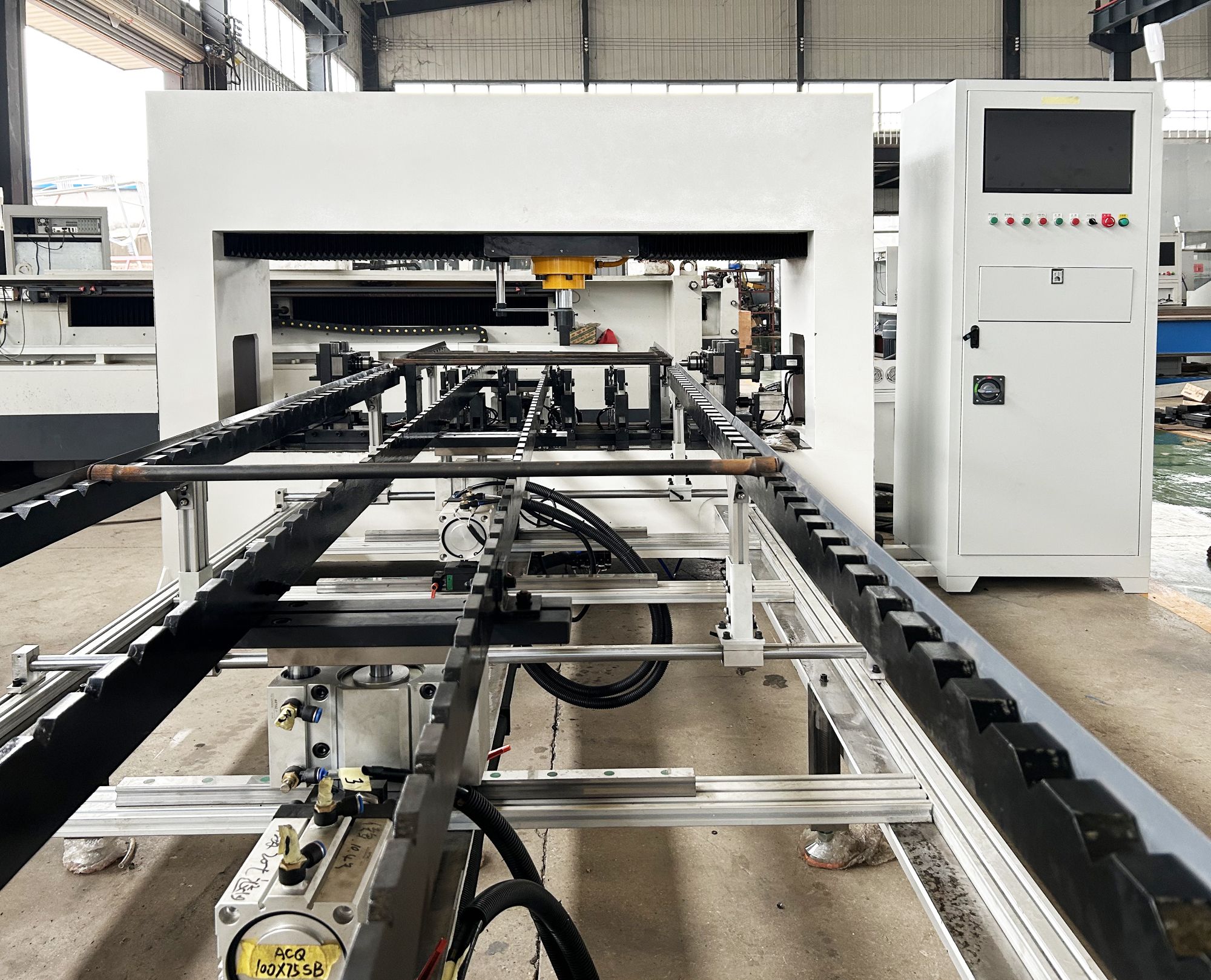
What “0.098 mm straightness” actually means
For a linear shaft, final straightness of 0.098 mm is a working number. It doesn’t mean the machine barely passed; it means the whole length stays within that band after the cycle. Because the blank already has high original precision, the machine doesn’t need to overpower a big bend. It removes small residual runout.
We measure at multiple points along the shaft. The system compares those readings to the target, decides where pressure belongs, and checks again after every correction. If the shaft drifts, the next pass compensates. It’s not a blind press-and-pray operation.
Automatic loading changes the labor math
One detail in the video worth paying attention to is the automatic feeding. The machine loads the shaft, cycles it, and unloads without an operator handling every piece. That may sound minor, but on a batch of linear shafts it’s where most of the manual cost goes. Instead of one person standing at a press, one operator can oversee several machines.
The feed system also helps repeatability. A consistent loading position means the measurement starts from the same reference every time. Less handling, fewer variables.
What to check before you invest
If you’re thinking about switching to automatic straightening for linear shafts, ask about the measuring points and the pressure control. Look for real-time monitoring so you can see correction data instead of trusting a final pass. And think about the material surface — point-pressure straightening should leave the shaft clean, which matters for seals and bearings later.
If you’d like to run a sample shaft through our process, contact us. The video above is a good place to start, but there’s no substitute for your own part numbers and tolerance data.