
The problem with long, large-diameter pipe
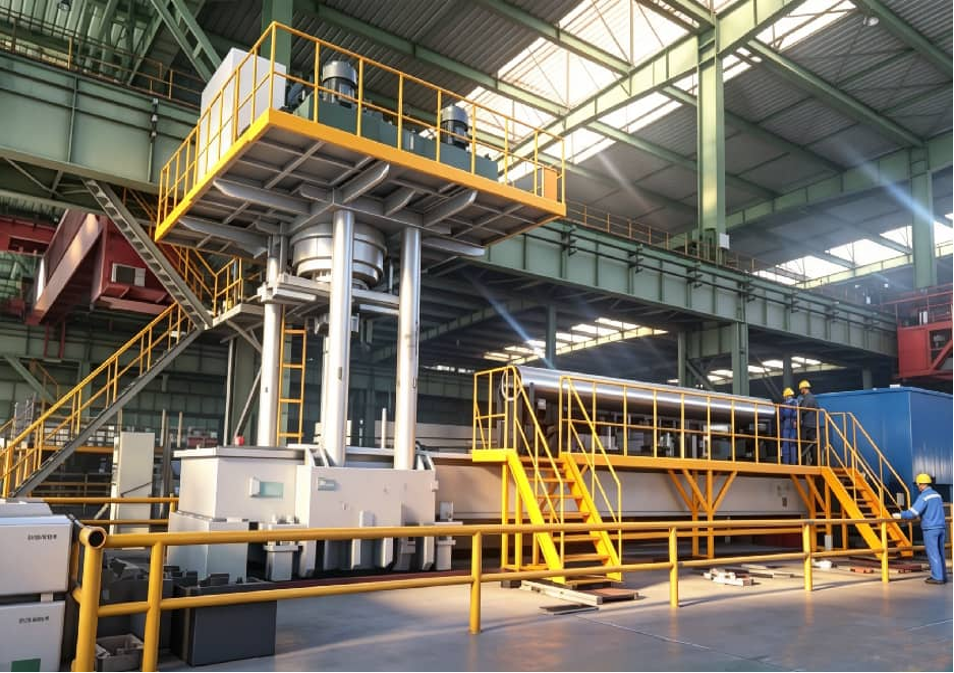
Straightening a 12 m × 400 mm steel pipe is not like truing a short shaft. The pipe is heavy, the bow is rarely one clean arc, and the surface usually carries a layer of oxide scale from heat treating or rolling. That combination demands more than raw tonnage. It needs a 630 t press that measures in multiple places, accounts for scale, and applies force without marking the material. The video above shows a correction cycle on this exact workpiece. Here’s what’s happening behind the cycle.
Map the whole pipe before you press
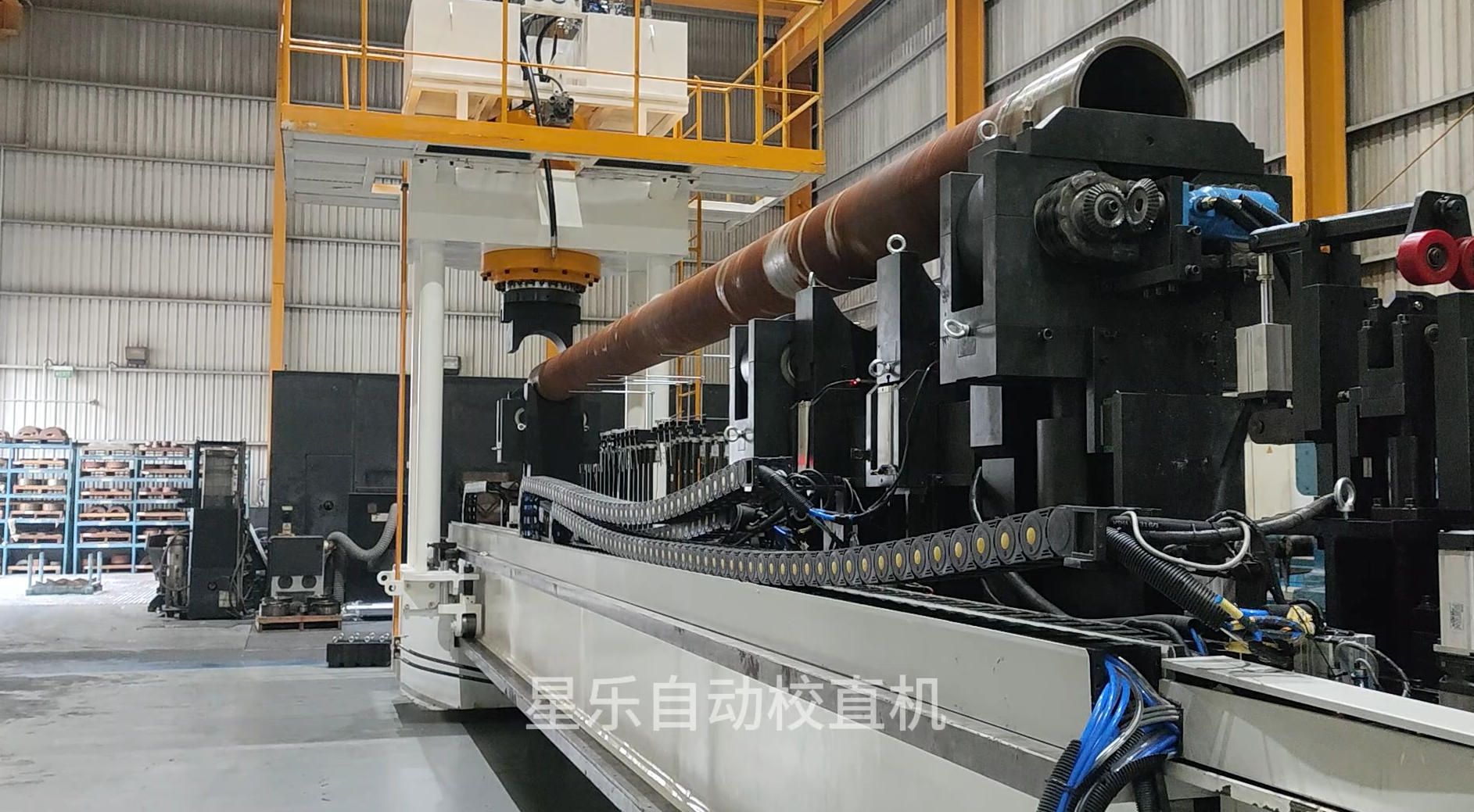
On a 12 m pipe, a single high-spot check isn’t enough. You may have one bow at 4 m, another reversed at 9 m, and springback that changes after the first hit. The press uses multi-point detection along the full length to build a runout profile, then chooses where to press. Oxide scale makes this harder: roughness and loose flakes create false peaks. If the system trusts every surface spike, it presses in the wrong place. The inspection image below shows the as-received surface condition before straightening.
What scale does to the reading
Scale thickness varies. Some spots are tight, others flake off under a probe. The control system has to sample enough points and reject outliers so it sees the true pipe center, not the crust. That’s why multi-point detection and filtering matter more on 400 mm heat-treated pipe than on clean shaft stock.
Flexible head, point-pressure correction
With 630 t available, you don’t want a rigid full-length die forcing the whole pipe. The press uses a flexible head that aligns to the local surface, then applies point-pressure straightening at the measured high points. The result: force goes where the runout is, the surrounding surface isn’t squeezed, and the oxide scale isn’t pressed into the metal as scratches or indentations.
What the numbers show
On this 12 m × 400 mm part, final straightness after correction came down to 0.67 mm across the full length. The press control is designed for accuracy down to 0.01 mm, but the real floor number with scale and material variation is what you see here.
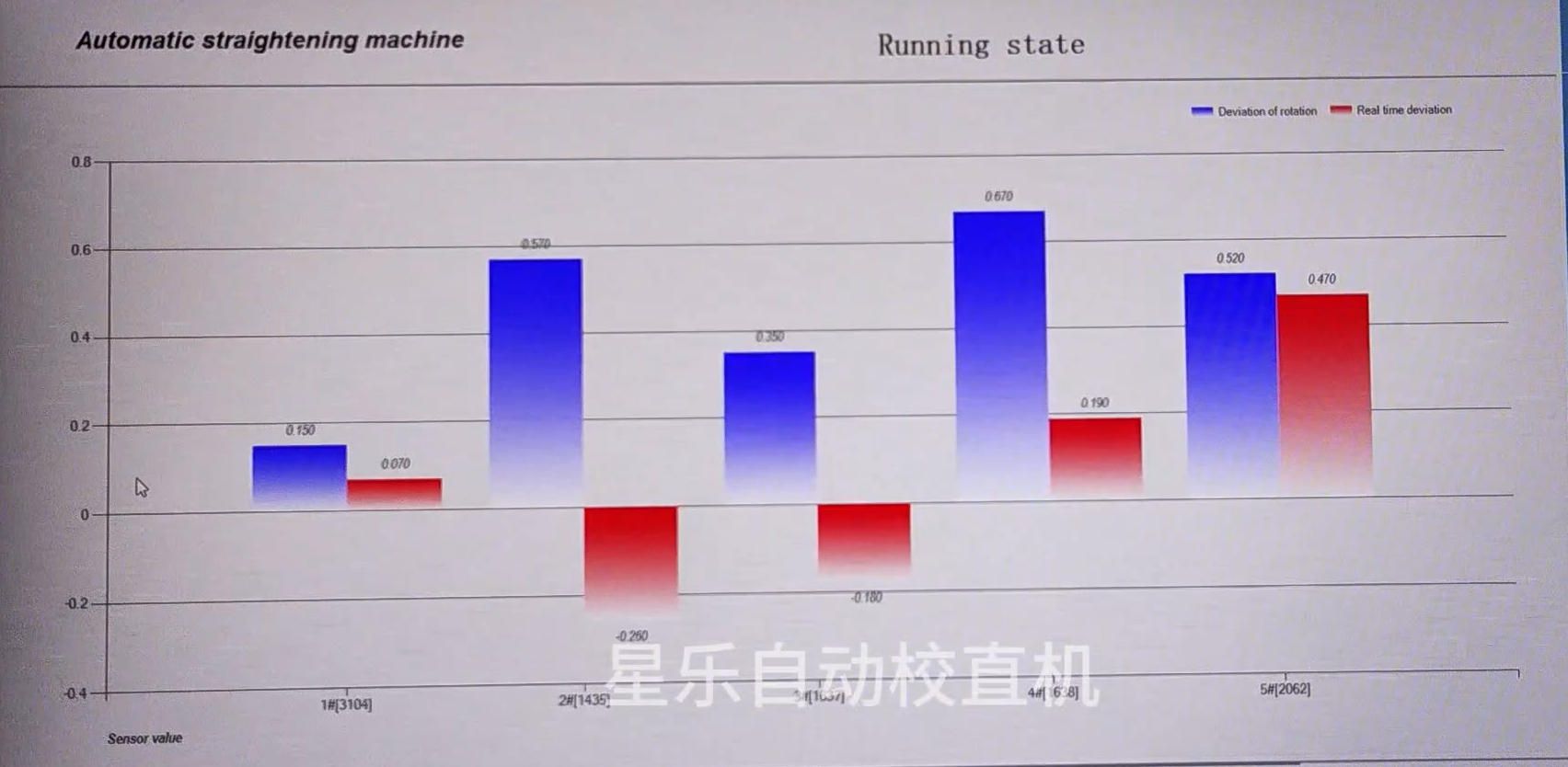
Compared with manual straightening, the full automated cycle is about 3–5× faster and one operator can manage multiple machines.
Practical takeaway
If you work with long, large-diameter pipe that arrives with scale, the logic is simple: size the press for the load, measure the whole pipe, and use a flexible point-pressure head instead of a hard full-length die. That combination protects surface quality and gets repeatable results. Watch the video above to see the cycle again. If you want to check a tolerance or plan a line, talk to us at Shangda.