
Stop Queueing Pipe for Straightening
Pipe straightening is not a job for a press. Send us your tube material, diameter, wall thickness, and initial bow. We will run a sample test and show you the throughput you can actually hit.
Automatic Pipe Straightening Machine
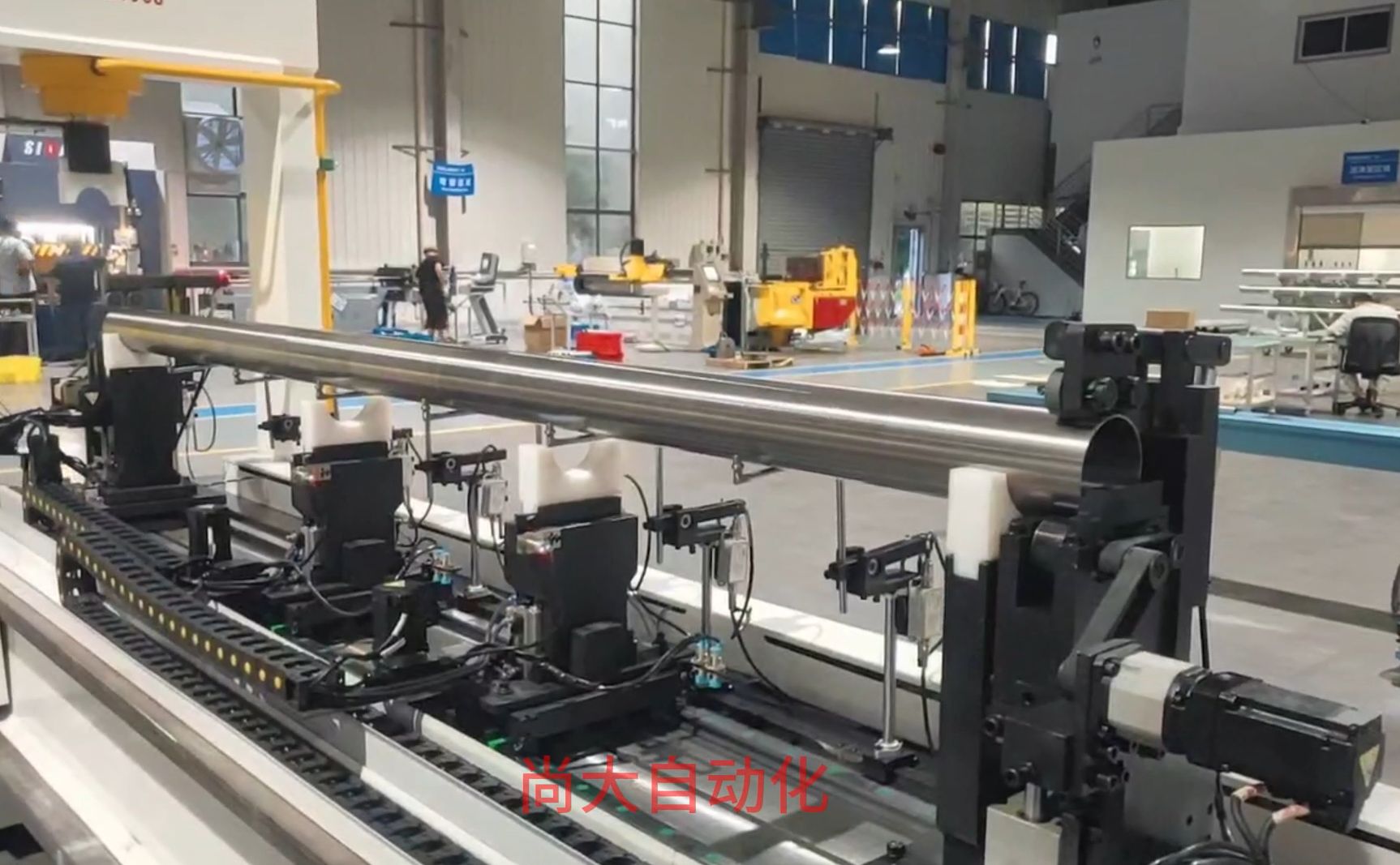
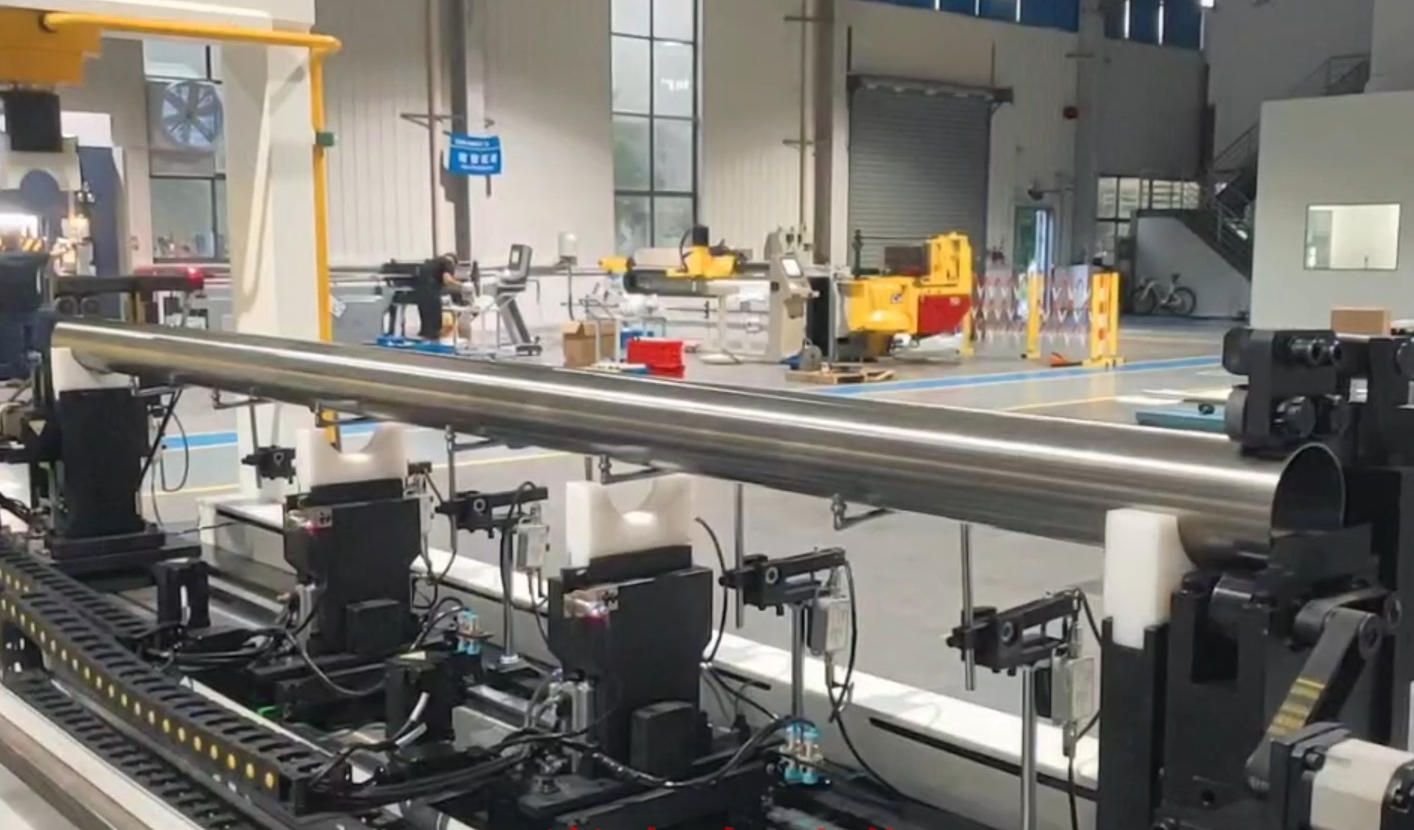
Built for high-volume large-diameter tubular workpieces. This machine feeds, measures, corrects, and unloads pipe automatically. One operator oversees the line while AI calibration adjusts pressure to material, diameter, wall thickness, length, and initial bow. A hydraulic press cannot get close to this cycle time or straightness consistency across a 12-meter tube.
Pipe Straightening Capacity & Speed
These numbers decide your production. Workpiece material, diameter, wall thickness, cross-section, length, and weight determine the pressure required. Initial deformation and target straightness determine the precision. The machine handles both.
Why Large-Diameter Throughput Holds Up
Every subsystem is engineered to move pipe without stopping. The straightening cycle is not a single press hit; it is a closed-loop correction sequence that measures, adjusts, and verifies.
Auto Loading & Unloading
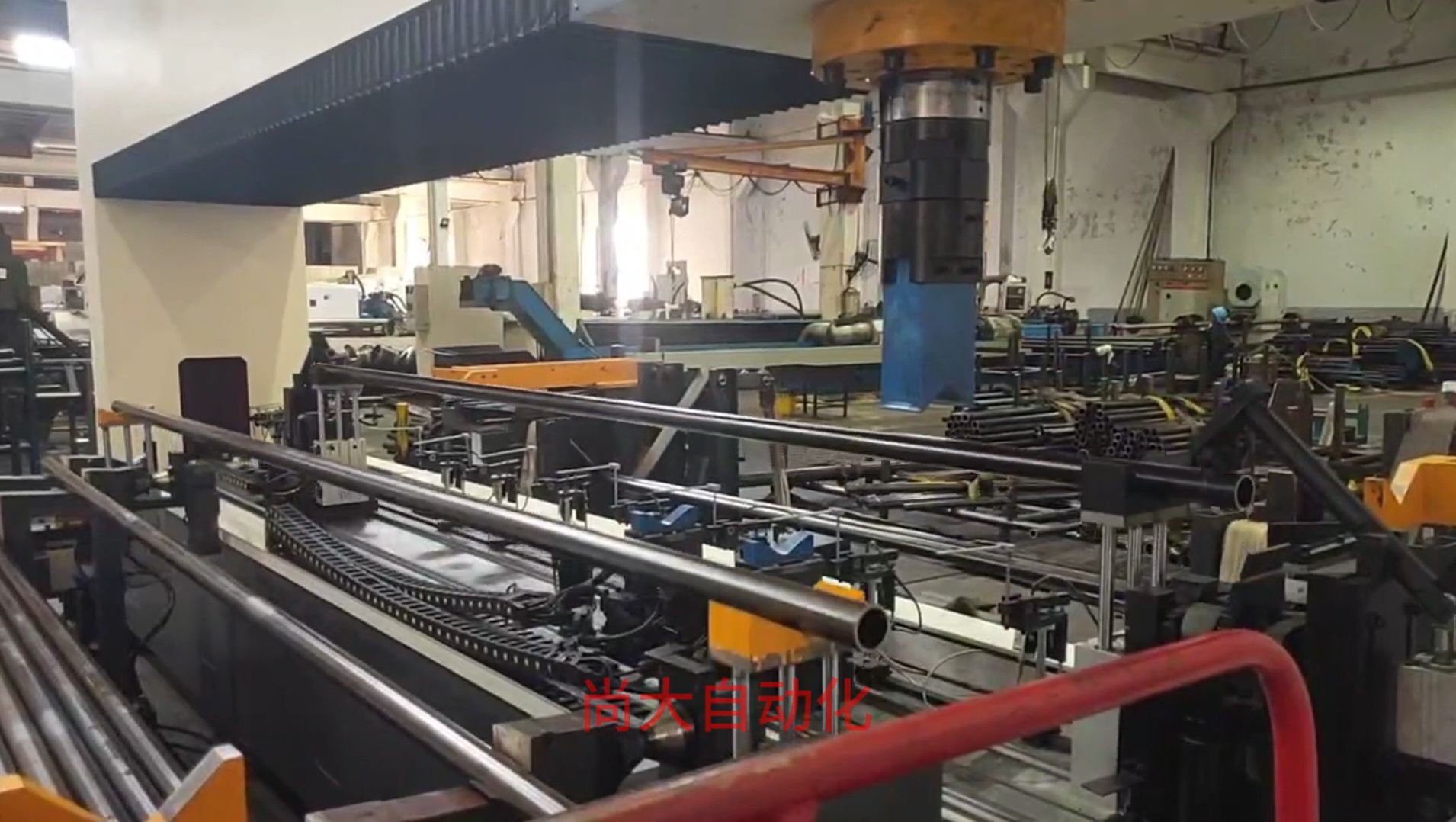
Roller conveyors and servo grippers feed pipe into the straightening station and remove finished pieces without manual handling. Changeover from Ø89 mm to Ø168 mm takes about 15 minutes.
AI Self-Learning Calibration
The system records spring-back after each correction and adjusts pressure and stroke for the next pipe of the same batch. After two or three pieces, the machine predicts the force needed for your material and wall thickness. No manual parameter tuning.
Multi-Point Laser Inspection
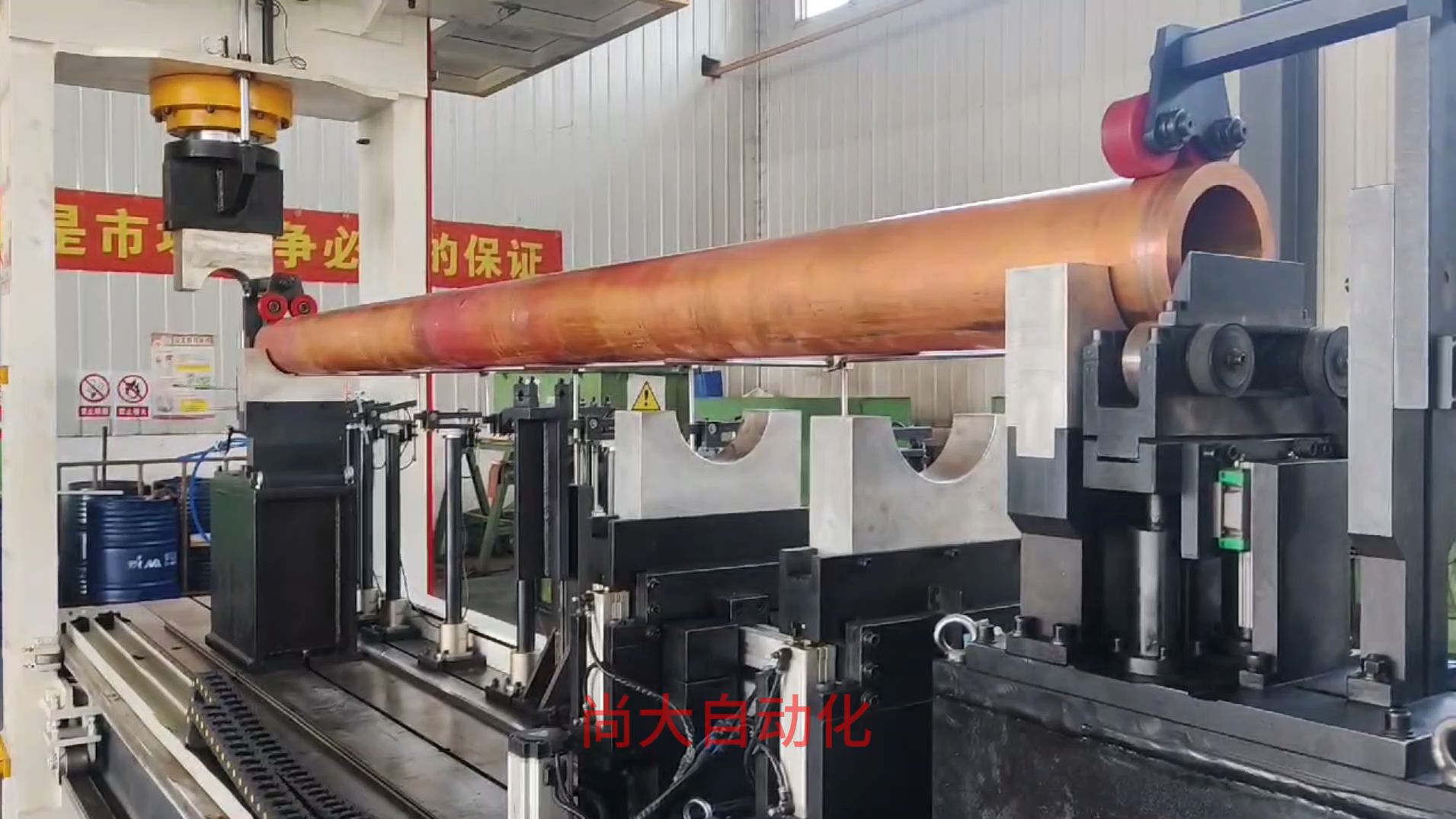
Three laser heads measure deflection along the tube length, not just at the center. You get verified straightness after every cycle, with data logged to MES. No operator judgement calls.
Point-Pressure Hydraulic Straightening
Two hydraulic cylinders press at calculated points along the pipe. Load is applied gradually, avoiding surface marks, indentation, or wall collapse on thin-wall tubing.
One Operator, Multiple Lines
Once the batch is set, the machine runs unattended. You check the screen, not the workpiece. One operator can manage three or four straightening cells.
No Scratches, No Indentations
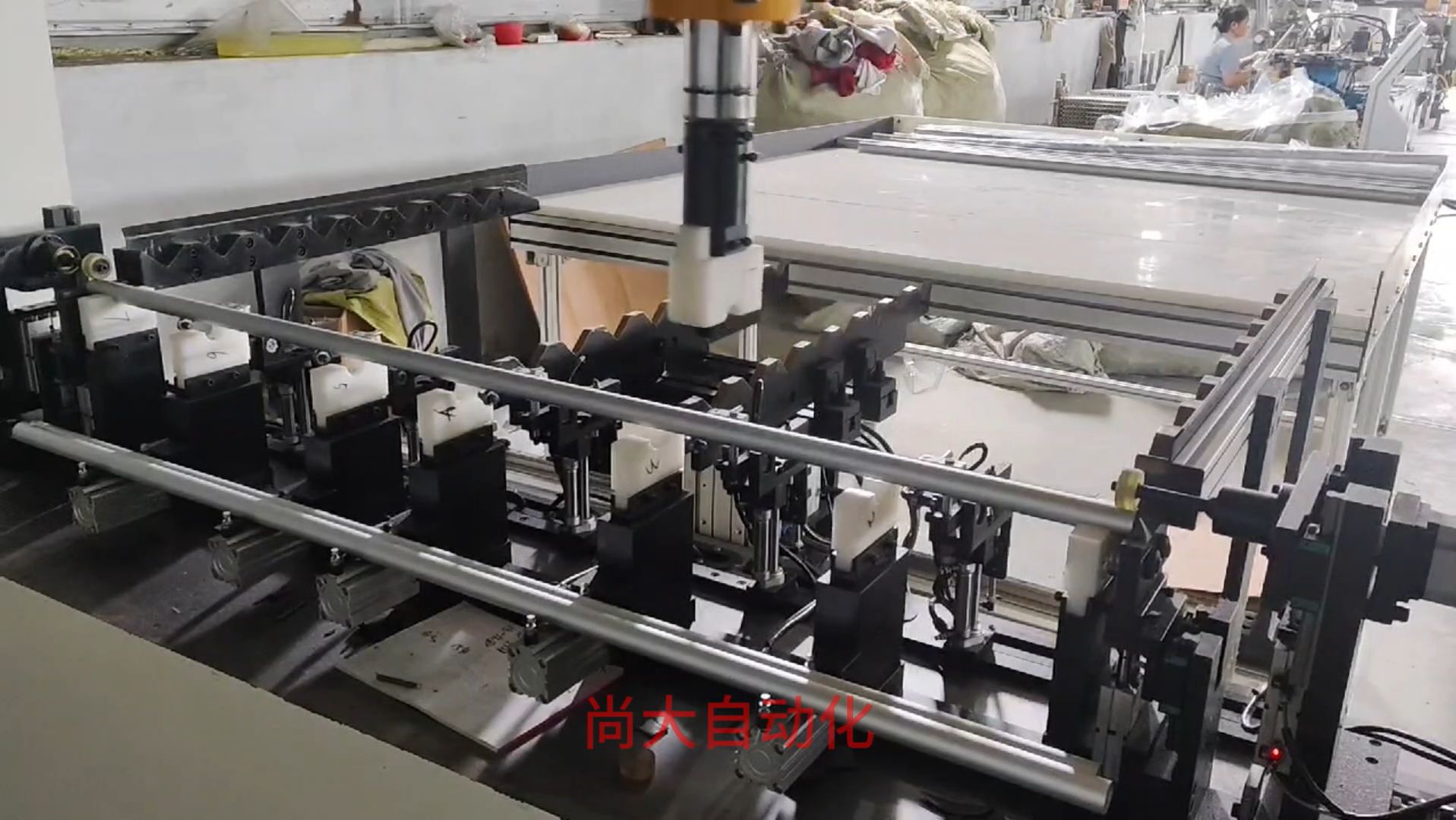
The tooling contacts the pipe only at the calculated pressure points, with force control that respects the yield strength of your material. Surface-finish-critical tubes stay clean.
Technical Data – SD-PSM-220
Values apply to the standard configuration. Final pressure and cycle time depend on tube material, diameter, wall thickness, length, and initial bow. Shangda engineers will confirm the exact parameters during sample testing.
| Workpiece OD range | 25–220 mm |
| Wall thickness | 2–25 mm (depending on OD) |
| Workpiece length | 2–12 m |
| Material | carbon steel, alloy steel, stainless steel, copper, brass, aluminum |
| Pressure capacity | 2000 kN |
| Straightening speed | 8–18 m/min feed |
| Cycle time | 45–90 s per pipe, measured from entry to exit |
| Measurement system | 3-point laser + optional QASS crack detection |
| Control | CNC closed-loop with AI self-learning correction |
| Loading/unloading | roller conveyor + servo grippers |
| Installed power | 45 kW |
| Floor space | 18 m × 4 m (excluding material buffer) |
Industries That Move High-Volume Pipe
Oil and gas runs first because drill pipe, casing, and production tubing arrive in batches of hundreds. This machine keeps the line moving without adding night-shift operators.
Request a Quote
Interested in Mesin pelurus pipa otomatis? Fill out the form below and our team will get back to you within 24 hours.