
Por qué el 4140 se mueve después del tratamiento térmico
Cuando un eje o una barra de 4140 mecanizados salen del tratamiento térmico con una comba visible, es fácil culpar al temple. He visto talleres desechar material bueno porque nadie separó las causas. La verdad es que la distorsión casi siempre proviene de una mezcla de gradientes térmicos, tensiones de transformación de fase, tensiones residuales del mecanizado o la forja, y de cómo se apoya la pieza durante el calentamiento y el enfriamiento. Una vez que puedes ver qué factor domina, puedes decidir qué prevenir en el proceso y qué corregir después del revenido.
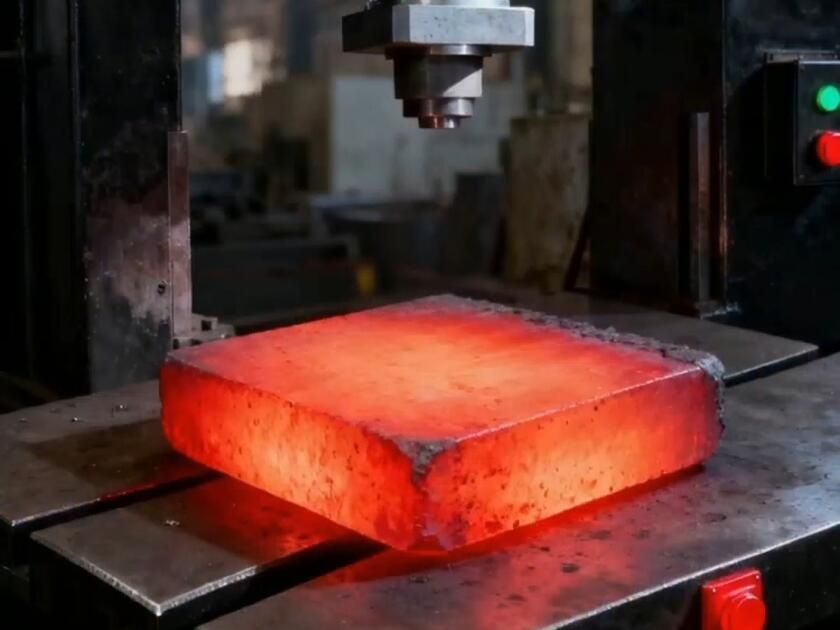
El 4140 es un acero al cromo-molibdeno de medio carbono que templa en profundidad en aceite o polímero. Esa templabilidad es útil para ejes, engranajes y herramientas, pero también significa que diferentes partes de la misma sección transversal pueden transformarse en momentos muy distintos. Esa falta de coincidencia es una de las mayores razones por las que las piezas se mueven.
Cuatro causas de proceso de la distorsión por tratamiento térmico del 4140
Puedes dividir los factores en cuatro grupos.
1. Gradientes térmicos durante el calentamiento y el temple
Cuando una barra larga se calienta, el exterior se expande más rápido que el centro. Durante el temple, la superficie se contrae y se enfría mientras el núcleo aún está caliente. Si la extracción de calor es más rápida en un lado, la pieza se comba hacia el lado que se enfría más despacio. Apoyar una barra larga en muy pocos puntos o colocarla de manera desigual en la cesta empeora esto bastante.
2. Velocidad de enfriamiento y transformación de fase
Durante el temple, la superficie se enfría más rápido que el núcleo. En el 4140, las regiones enfriadas más rápido pueden transformarse en martensita, mientras que las regiones más lentas forman bainita o perlita. Los diferentes productos de transformación tienen distintos volúmenes específicos y se forman en momentos diferentes. Una región puede estar expandiéndose mientras otra todavía se contrae. Esa deformación local crea flexión y, a veces, torsión, especialmente en ejes escalonados o piezas con agujeros y chaveteros.
3. Tensiones residuales de operaciones previas
Incluso antes del tratamiento térmico, la barra soporta tensiones del laminado, la forja, el enderezado o el mecanizado en desbaste. El calentamiento libera algunas de esas tensiones de forma desigual. Un eje que parecía recto después del mecanizado puede moverse durante el temple simplemente porque el material finalmente tuvo la oportunidad de relajarse hacia una forma con menos tensiones.
4. Geometría y sujeción
Las secciones asimétricas, los agujeros, los chaveteros y los cambios de escalón alteran cómo fluye el calor. Si una pieza se sujeta con demasiada rigidez, no puede moverse mientras se acumulan las tensiones y se libera de golpe cuando se quitan las sujeciones. Si se apila o se apoya mal, la gravedad y los puntos de contacto añaden tensión local. Las piezas largas son especialmente sensibles a la separación entre apoyos.
Prevención en el proceso vs. corrección posterior al proceso
Hay dos formas distintas de tratar la distorsión del 4140. Puedes reducirla antes y durante el tratamiento térmico, o corregir la comba restante después del revenido. No son intercambiables.
| Enfoque | Qué hace | Limitación principal |
|---|---|---|
| Normalizado o alivio de tensiones antes del temple | Reduce las tensiones residuales previas de la forja o el mecanizado en desbaste | No cancela la flexión inducida por el temple |
| Calentamiento controlado y temple más lento | Reduce el gradiente térmico y la falta de coincidencia de transformación | Puede reducir la dureza o la templabilidad si se exagera |
| Diseño de utillajes y soportes | Mantiene constante la orientación de la pieza y la separación entre apoyos | No puede compensar del todo una sección muy poco uniforme |
| Enderezado posterior al revenido | Corrige la comba residual después de que el proceso ha liberado tensiones | Añade nuevas tensiones y requiere fuerza controlada |
Los pasos preventivos valen la pena, pero tienen límites prácticos. En piezas largas y esbeltas, puede quedar cierta comba residual incluso después de un control cuidadoso del proceso. Esa flexión remanente es donde el enderezado se convierte en un paso de corrección racional, en lugar de un parche.
Dónde tiene sentido el enderezado — y dónde no
Si tus mejoras de proceso aún dejan una comba residual, el enderezado puede ser un paso de corrección práctico. No es una solución universal. Lo considero un límite, no un reemplazo del control del tratamiento térmico.
- El enderezado normalmente funciona en 4140 después del revenido, cuando la dureza todavía es trabajable y la pieza tiene cierta ductilidad.
- Funciona bien en barras, ejes, tubos y perfiles simétricos con una comba uniforme.
- Es menos apropiado en martensita muy dura y sin revenir o en piezas con entallas agudas que pueden agrietarse bajo la fuerza de la prensa.
- Debes comprobar si hay grietas después del enderezado, especialmente en piezas de alta dureza o que soportan altas tensiones residuales.
El enderezado manual puede manejar unas pocas piezas, pero la repetibilidad se resiente. Ahí es donde suele entrar el enderezado hidráulico automatizado.
Enderezado hidráulico automático para corrección repetitiva posterior al tratamiento térmico
Cuando corriges cientos de barras o tubos de 4140 después del tratamiento térmico, el enderezado manual en prensa se convierte en un cuello de botella. Un operador prensa, comprueba, vuelve a prensar, y el resultado depende de quién haga el trabajo. Una línea de enderezado hidráulico automático cambia eso. La máquina carga la pieza, mide la desviación radial en varios puntos, calcula el punto alto, aplica una carrera controlada y vuelve a medir. Sigue hasta que la pieza queda dentro de tolerancia.
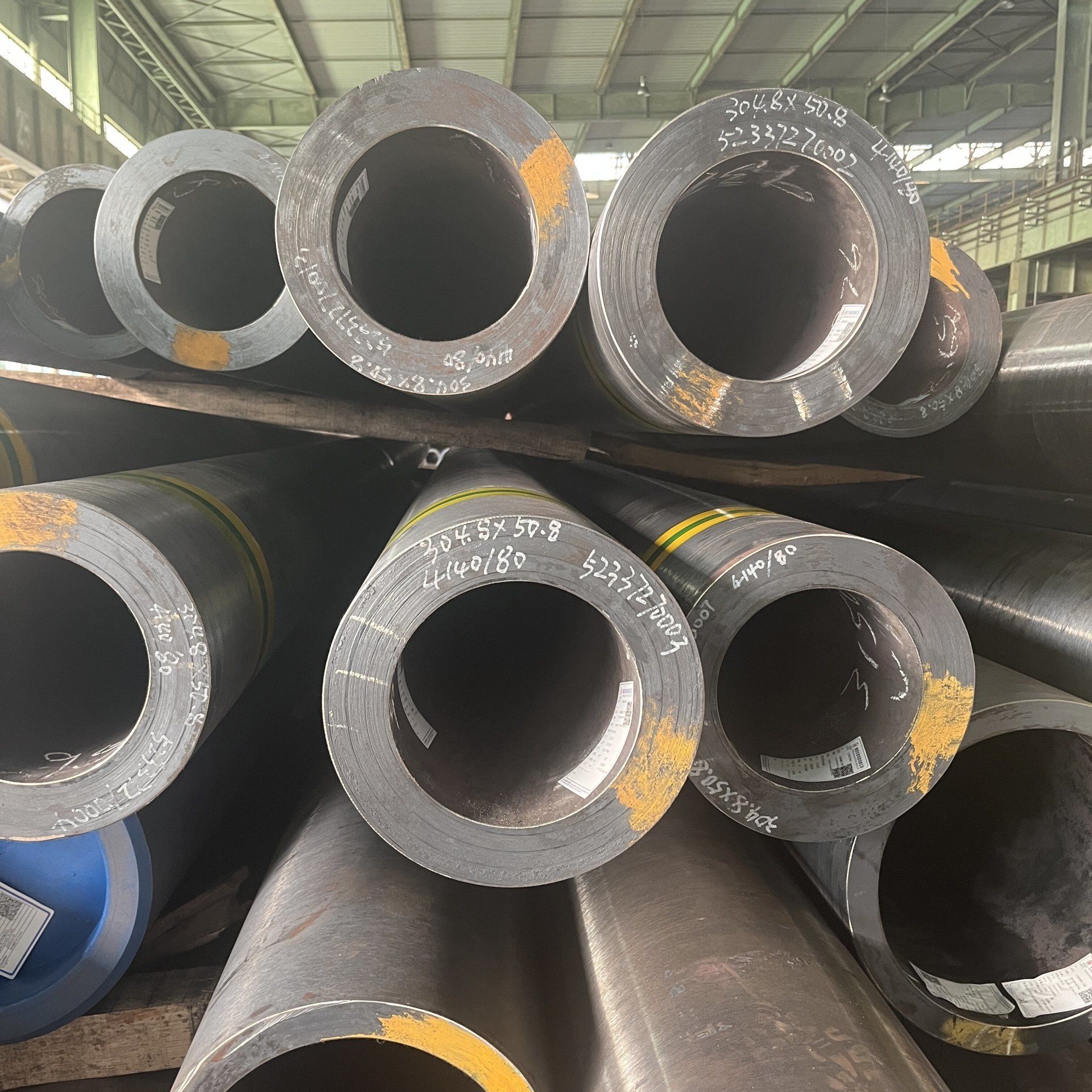
En ejes y barras redondas de 4140, nuestros sistemas de enderezado automático pueden mantener la rectitud dentro de 0,01 mm y funcionar de tres a cinco veces más rápido que la operación manual. Como el sistema de control registra cada resultado de corrección y ajusta la siguiente carrera, un operador puede gestionar varias máquinas a la vez. Para piezas largas o pesadas, esto importa aún más.
También integramos detección de grietas de QASS de Alemania en algunas líneas cuando las piezas están cerca de los límites superiores de dureza o cuando las especificaciones del cliente lo requieren. Eso te da la oportunidad de separar las piezas agrietadas antes de seguir prensándolas. Este tipo de sistema no es una solución para un mal temple, pero es una forma repetible de manejar la flexión residual que el control del proceso por sí solo no eliminó.
Qué puedes llevar al taller
Para la distorsión por tratamiento térmico del 4140, yo empezaría por el proceso: revisar el apoyo y la sujeción, reducir los gradientes térmicos innecesarios, aliviar las tensiones residuales antes del temple y evitar un temple excesivo para la geometría de la pieza. Luego mide cuánta comba queda. Si la flexión restante está dentro de un rango de corrección admisible y la pieza está en condición dúctil después del revenido, el enderezado tiene sentido. Si las piezas se agrietan en la prensa o se mueven después de la corrección, detente y vuelve a revisar el proceso.
Para la corrección repetitiva posterior al tratamiento térmico, el enderezado hidráulico automático ofrece una alternativa más predecible que una prensa manual, especialmente en barras, ejes y tubos largos. Si quieres analizar más de cerca tus propios casos de distorsión en 4140, no dudes en contactarnos y podemos revisar los detalles.